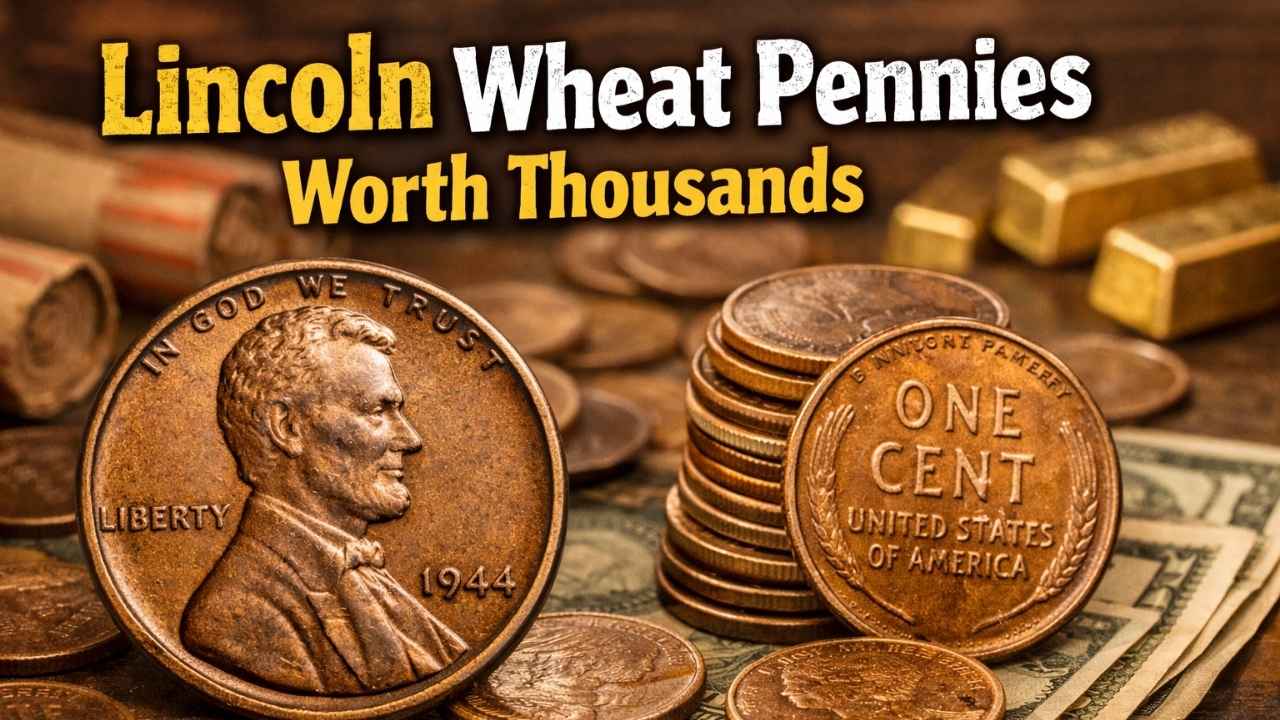
Rare Lincoln Wheat Pennies Worth Thousands: The Lincoln Wheat Penny, introduced in 1909, marked a turning point in American coinage. It was the first circulating coin to feature a real person, Abraham Lincoln, rather than a symbolic figure. Designed by Victor David Brenner, the coin carried Lincoln’s portrait on the front and two wheat stalks on the reverse, symbolizing prosperity. Produced until 1958, this penny became a staple of everyday life, yet certain issues have become legendary among collectors for their rarity and value.
What Makes a Penny Rare
Not all Wheat Pennies are valuable, but some stand out due to limited production, minting mistakes, or unusual circumstances. Coins with low mintage numbers are naturally harder to find. Error coins, where something went wrong during production, often become prized collectibles. Historical events also played a role, such as wartime shortages that led to unusual materials being used. Finally, condition matters: a coin preserved in mint state can be worth exponentially more than one that has circulated heavily.
The Famous 1909-S VDB
The 1909-S VDB is perhaps the most iconic Wheat Penny. Brenner’s initials, VDB, were placed prominently on the reverse, sparking controversy. The initials were quickly removed, but not before 484,000 coins were struck at the San Francisco Mint. Because of the low number and historical significance, this penny is a cornerstone of any serious collection. Well-preserved examples can sell for tens of thousands of dollars.
The Elusive 1914-D
Another highly sought-after coin is the 1914-D, minted in Denver. With just over one million produced, it is scarce compared to other years. Many of the surviving examples are heavily worn, making high-grade specimens extremely valuable. Collectors often consider this penny one of the toughest early dates to acquire, with prices reaching thousands depending on condition.
The 1922 No D Error
In 1922, all Wheat Pennies were supposed to be minted in Denver, marked with a “D.” However, some coins were struck without the mint mark due to a worn die. These “No D” pennies are rare and highly collectible. Spotting one requires careful inspection, but finding one can mean holding a coin worth thousands.
The 1931-S Low Mintage
The 1931-S is another key date, with fewer than one million produced. While not as famous as the 1909-S VDB, it remains a significant rarity. Collectors prize it for its scarcity, and values rise sharply for coins in excellent condition.
Wartime Rarities of the 1940s
World War II brought unique challenges to coin production. Copper was needed for the war effort, so in 1943 pennies were struck in steel. A few mistakes occurred, and some were minted in bronze instead. These 1943 Bronze Cents are among the most famous error coins in U.S. history, with auction prices soaring into the hundreds of thousands. Similarly, in 1944, when production returned to copper, a few pennies were accidentally struck in steel. These 1944 Steel Cents are equally rare and valuable.
Auction Records That Inspire Collectors
The market for rare Wheat Pennies has produced astonishing results. A 1943-D Bronze Cent once sold for $840,000, while a 1944-S Steel Cent fetched over $400,000. Even the more common key dates, like the 1909-S VDB, can bring tens of thousands when in pristine condition. These records highlight the extraordinary potential hidden in coins that once circulated for a single cent.
How to Spot Valuable Wheat Pennies
Collectors often dream of finding a rare penny in a jar of old change. To identify valuable coins, start by checking the date and mint mark. Focus on the key years mentioned above. Look for unusual features, such as missing mint marks or odd coloring that could indicate an error. Condition is critical, so examine the coin’s surface carefully. Using a magnifying glass can help reveal small details that make a big difference in value.
The Collector’s Experience
Collecting Wheat Pennies is not just about money. It is a journey into history, connecting everyday objects with extraordinary stories. Each coin reflects the era in which it was minted, from Lincoln’s centennial to wartime resource shortages. The thrill of discovery keeps collectors engaged, whether they are searching through rolls of pennies or bidding at auctions. For many, the hobby is about preserving history as much as it is about finding treasures.
The Market Today
Interest in rare coins remains strong, and Wheat Pennies continue to attract attention. Prices for key dates have held steady or risen, reflecting both their scarcity and enduring appeal. While not every penny will be worth thousands, the possibility of uncovering a hidden gem keeps collectors motivated. For investors, rare Wheat Pennies offer both historical charm and financial potential, though authentication and grading are essential to avoid costly mistakes.
Conclusion
Lincoln Wheat Pennies are more than small copper coins. They are pieces of history, symbols of American resilience, and potential treasures worth thousands. From the 1909-S VDB to the wartime error coins of the 1940s, these pennies captivate collectors and investors alike. Whether discovered in an old family collection or purchased at a prestigious auction, the allure of the Wheat Penny endures. For those who seek them, these coins are not just currency—they are stories etched in metal, waiting to be discovered.