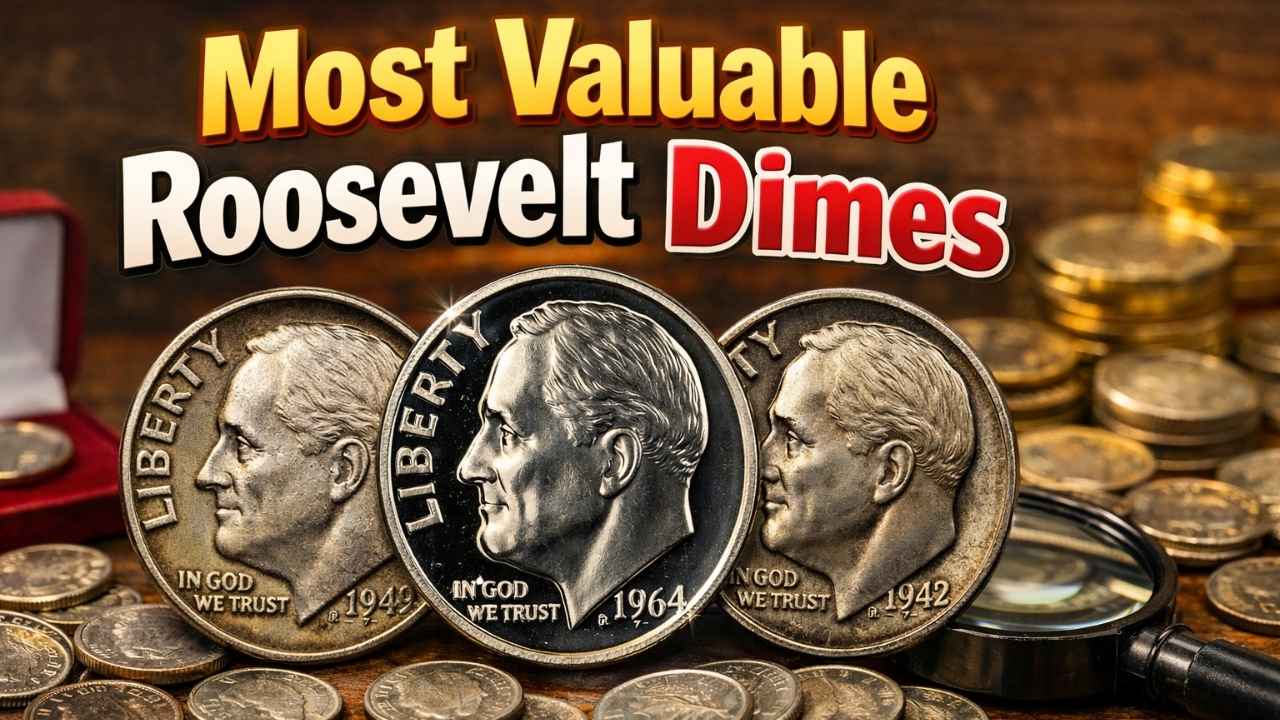
Million Dollar Coin Rarities 2026: Coin collecting is more than a pastime. It is a way of holding history in your hands, of connecting with the artistry and symbolism of a nation’s currency. In 2026, collectors are especially captivated by three American coins: the Kennedy Half Dollar, the Sacagawea Dollar, and the Susan B. Anthony Dollar. Each coin carries a unique story, and certain rare editions have reached values that astonish even seasoned numismatists.
Kennedy Half Dollar Beginnings
The Kennedy Half Dollar was first minted in 1964, just months after the assassination of President John F. Kennedy. It was intended as a tribute to his legacy, and the coin quickly became a symbol of national pride. The earliest versions were struck in 90 percent silver, making them highly desirable. Over time, the composition shifted to copper nickel, but collectors still prize the silver issues.

Kennedy Half Dollar Rarities
Several varieties of the Kennedy Half Dollar stand out. The 1964 Accented Hair proof is one of the most famous, distinguished by sharper details in Kennedy’s hair. Another rarity is the 1970-D issue, which was never released for circulation and only available in mint sets. Collectors also seek the 1998-S Matte Finish proof, a coin with a distinctive texture that sets it apart from standard proofs. These rarities often sell for thousands of dollars, depending on condition and certification, and the finest examples can reach values that surprise even experts.
Sacagawea Dollar Introduction
The Sacagawea Dollar debuted in 2000, honoring the Shoshone woman who guided Lewis and Clark on their expedition. The coin features her portrait with her infant son, Jean Baptiste, and a soaring eagle on the reverse. Although intended to replace the dollar bill, it never gained widespread circulation. Still, the coin remains a favorite among collectors for its design and historical significance.
Sacagawea Dollar Rarities
The most famous rarity in the Sacagawea series is the 2000 Cheerios Dollar. These coins were distributed in cereal boxes as part of a promotion, but they feature a prototype reverse design with enhanced eagle tail feathers. Only a few thousand exist, and they can command values well into the tens of thousands. Another notable rarity is the 2000-P Goodacre Presentation Dollar, specially struck for artist Glenna Goodacre, who designed the coin. These coins have a distinctive finish and are highly prized by collectors who appreciate their unique origin.
Susan B. Anthony Dollar Background
The Susan B. Anthony Dollar was introduced in 1979 as the first coin to honor a real woman in U.S. history. Its small size and similarity to the quarter led to confusion, and the coin was discontinued after 1981, with a brief revival in 1999. Despite its short run, the coin remains significant as a tribute to the suffragist who fought for women’s rights.
Susan B. Anthony Dollar Rarities
While most Susan B. Anthony Dollars are common, a few stand out. The 1979-P Wide Rim variety is one of the most sought-after, with a design that differs from the standard narrow rim. Collectors also value proof issues from the San Francisco Mint, particularly those with deep cameo finishes. The 1999 issues, struck after an 18-year hiatus, are also popular among collectors who appreciate their historical context and rarity.
Market Trends in 2026
The coin market in 2026 reflects a growing interest in American history and tangible assets. Rare coins are increasingly seen as alternative investments, with values rising steadily. Auction houses report strong demand for high-grade Kennedy Half Dollars, Cheerios Sacagawea Dollars, and Wide Rim Susan B. Anthony Dollars. Certified coins with impeccable provenance often achieve record prices, sometimes reaching into the million-dollar range for the rarest examples.

The Importance of Grading
Grading plays a crucial role in determining coin value. Professional services such as PCGS and NGC assign grades based on condition, ranging from circulated to mint state. A coin graded MS-70, meaning perfect condition, can be worth exponentially more than one with minor flaws. Collectors in 2026 are increasingly aware of the importance of certification, not only for value but also for authenticity.
Collecting Strategies
For those entering the world of coin collecting, strategy is essential. Beginners often start with circulated Kennedy Half Dollars or common Susan B. Anthony issues, gradually building knowledge and experience. More advanced collectors seek rarities, focusing on specific varieties or proof issues. Patience and research are key, as the market rewards those who understand the nuances of mint marks, finishes, and historical context.
Cultural Significance
Beyond monetary value, these coins carry cultural weight. The Kennedy Half Dollar symbolizes a nation’s mourning and resilience. The Sacagawea Dollar honors Indigenous contributions to American history. The Susan B. Anthony Dollar celebrates the fight for equality. Collectors often view their coins not just as investments but as pieces of a larger narrative about the United States.
Looking Ahead
As 2026 progresses, the fascination with coin rarities shows no sign of slowing. New discoveries, such as previously unknown varieties or hoards of rare issues, continue to excite the numismatic community. The Kennedy Half Dollar, Sacagawea Dollar, and Susan B. Anthony Dollar remain at the forefront of this enthusiasm, offering collectors both financial rewards and a deeper connection to history.

Conclusion
Rare coins are more than metal and design. They are stories captured in miniature, reminders of pivotal moments and influential figures. In 2026, the Kennedy Half Dollar, Sacagawea Dollar, and Susan B. Anthony Dollar stand as testaments to America’s evolving identity. For collectors, they represent not only potential million-dollar rarities but also treasures of heritage and meaning. Whether pursued for profit or passion, these coins continue to inspire, proving that history can be held in the palm of one’s hand.