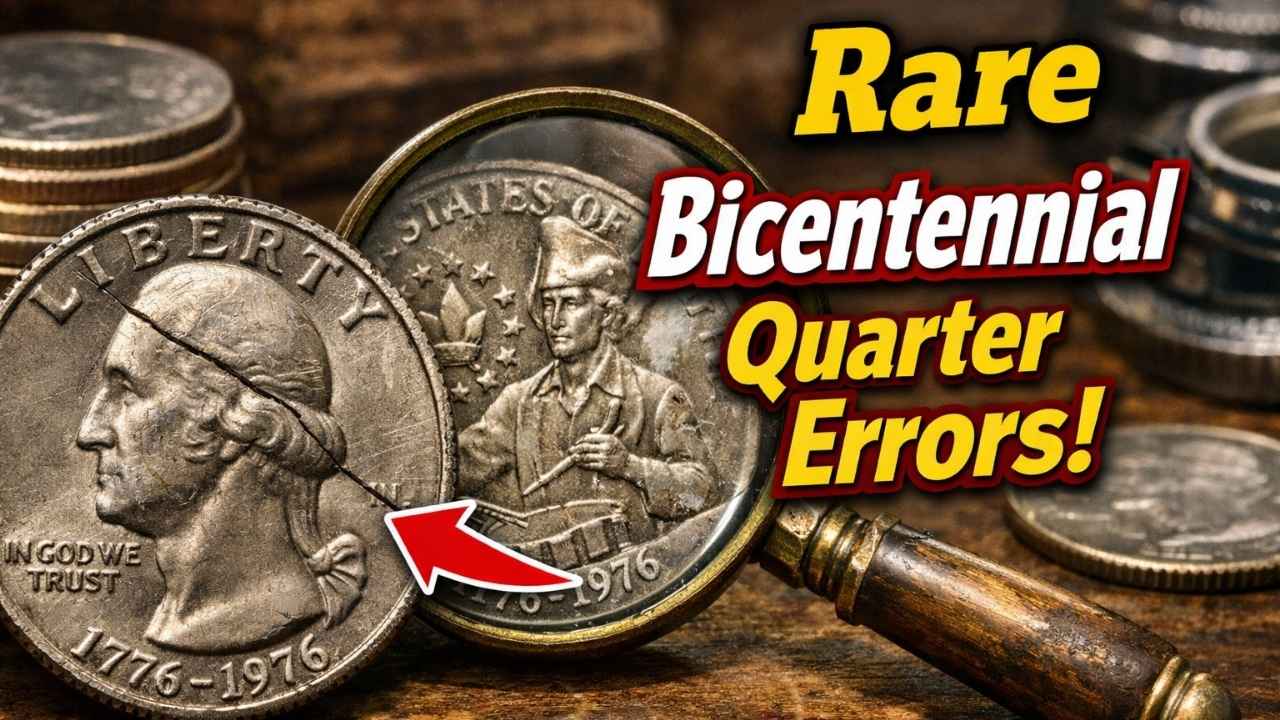
Rare Bicentennial Quarter Errors: In 1976, the United States celebrated its 200th anniversary of independence. To mark the occasion, the U.S. Mint released special commemorative coins, including the Bicentennial Quarter. Unlike regular quarters, these coins featured a unique reverse design showing a colonial drummer and a torch surrounded by thirteen stars. The obverse still carried George Washington’s portrait, but the date was changed to read 1776–1976. These coins were produced in massive numbers and circulated widely, yet certain rare varieties and minting errors have turned ordinary pocket change into valuable collectibles.
Why Some Bicentennial Quarters Are Valuable
Most Bicentennial Quarters are common and worth only face value. However, rarity arises when coins are struck with mistakes or unusual characteristics. Errors such as double strikes, off-center strikes, wrong planchet usage, or unusual metal compositions can make a coin worth thousands. Collectors prize these anomalies because they represent unique accidents in the minting process. Condition also plays a major role. A flawless coin graded in mint state can be worth far more than a circulated example.

Double Die Errors
One of the most famous types of coin errors is the double die. This occurs when the coin’s design is impressed twice at slightly different angles, creating a doubled image. On Bicentennial Quarters, doubling can appear on the date, lettering, or drummer design. These coins are rare and can command high prices depending on the clarity of the doubling and the coin’s condition.
Off-Center Strikes
Another error that adds value is the off-center strike. This happens when the coin blank is not properly aligned in the press, causing the design to be struck off-center. Bicentennial Quarters with significant off-center errors are scarce and highly collectible. The more dramatic the misalignment, the more valuable the coin becomes. Examples with more than 50 percent off-center strikes can sell for thousands.
Wrong Planchet Errors
Occasionally, coins are struck on the wrong type of metal blank, known as a planchet. Bicentennial Quarters struck on nickel or dime planchets are extremely rare. These coins are smaller or lighter than normal and often show incomplete designs. Because they are so unusual, they attract strong interest from collectors and can bring high auction prices.
Silver Bicentennial Quarters
While most Bicentennial Quarters were made of copper-nickel, the U.S. Mint also produced special silver versions for collectors. These were sold in proof sets and mint sets. Although not errors, silver Bicentennial Quarters are more valuable than their copper-nickel counterparts. High-grade examples can sell for hundreds, and rare varieties with errors can reach into the thousands.

Proof Coin Errors
Proof coins are specially struck for collectors, with polished dies and blanks that create mirror-like surfaces. Bicentennial Proof Quarters are already desirable, but when errors occur, they become even more valuable. Examples include coins with missing layers, improper polishing, or unusual toning. These proof errors are rare and often sell for significant sums.
Auction Records That Surprise Collectors
Some Bicentennial Quarter errors have achieved remarkable prices at auction. Coins with dramatic off-center strikes or struck on wrong planchets have sold for thousands. Double die errors in pristine condition can also command high values. Even silver proof errors have reached impressive figures, showing that collectors are willing to pay a premium for unique pieces of history.
How to Identify Valuable Bicentennial Quarters
Collectors often wonder how to spot valuable Bicentennial Quarters. Here are some tips:
- Examine the date and lettering closely for signs of doubling.
- Look at the coin’s alignment to see if the strike is off-center.
- Weigh the coin to check if it was struck on the wrong planchet.
- Inspect the coin’s surface for unusual toning or missing layers.
- Consider the coin’s condition, as higher grades are worth more.
Using a magnifying glass and a scale can help identify these features. Professional grading services can also confirm authenticity and assign a grade that determines value.

The Collector’s Perspective
For many collectors, Bicentennial Quarters are more than just coins. They represent a celebration of American independence and a unique moment in history. The thrill of finding an error coin adds excitement to the hobby. Whether discovered in circulation or purchased at auction, these coins connect collectors to the past while offering the possibility of financial reward.
The Market Today
Interest in Bicentennial Quarters remains strong. While most examples are common, rare errors continue to attract attention and high bids. Prices for key varieties have held steady or increased, reflecting their scarcity and appeal. Collectors and investors alike see these coins as both historical artifacts and potential treasures. The market for coin errors is vibrant, and Bicentennial Quarters are a central part of that story.
Conclusion
The Bicentennial Quarter is a symbol of America’s 200th anniversary, but it is also a source of fascination for collectors. While most are worth only face value, rare errors and special varieties can be worth thousands. From double die errors to off-center strikes and wrong planchet coins, these anomalies transform ordinary change into extraordinary collectibles. For those who seek them, Bicentennial Quarters are not just coins—they are pieces of history, stories in metal, and treasures waiting to be discovered.