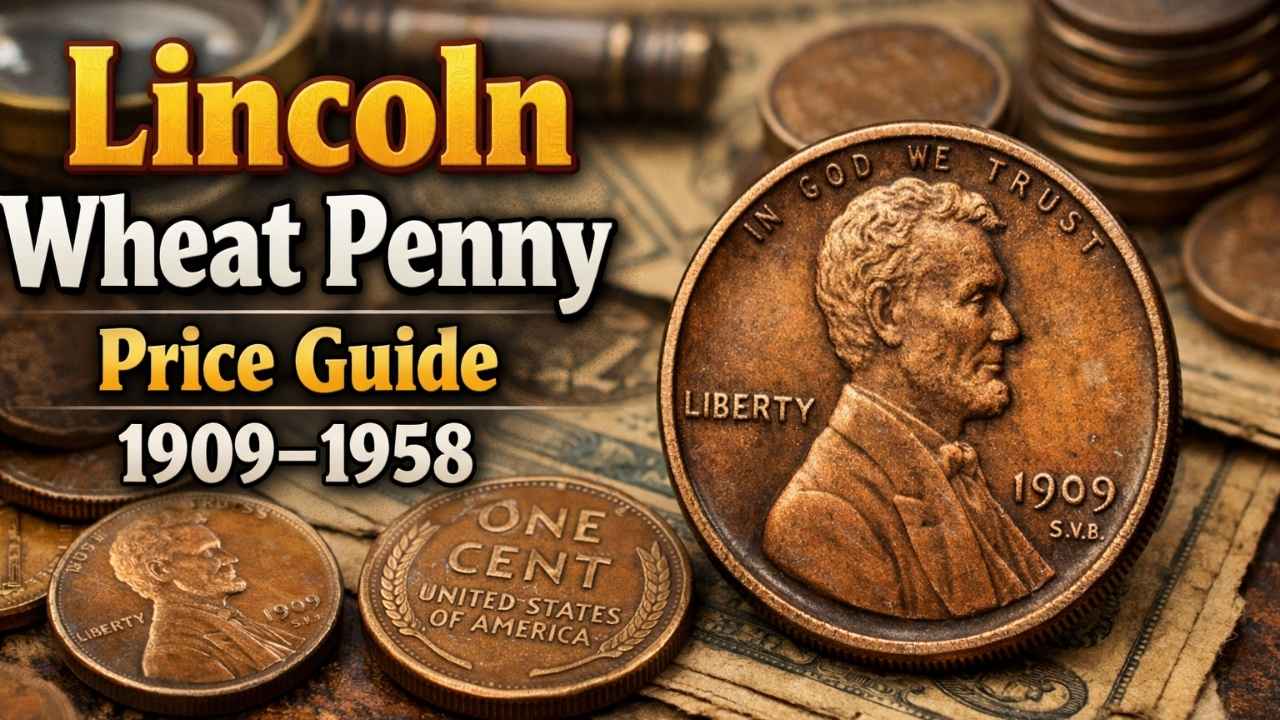
Lincoln Wheat Penny Price Guide 1909–1958: The Lincoln Wheat penny is one of the most iconic coins in American numismatics. Minted from 1909 to 1958, it carries both historical significance and collector appeal. For many enthusiasts, the Wheat penny is the gateway into coin collecting, offering a blend of affordability, rarity, and nostalgia. Understanding its value requires looking at mint years, conditions, and special varieties that make certain issues stand out.
The Birth of the Lincoln Wheat Penny
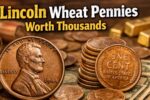
Introduced in 1909 to commemorate the centennial of Abraham Lincoln’s birth, the Wheat penny was the first U.S. coin to feature a real person rather than a symbolic figure. Victor David Brenner designed the coin, with Lincoln’s portrait on the obverse and two wheat stalks framing the denomination on the reverse. This design remained in circulation until 1958, when the reverse was changed to the Lincoln Memorial.
Key Dates and Rarities
Collectors often focus on specific years that are considered rare or valuable. Among the most notable are:
- 1909-S VDB: The San Francisco mint produced only 484,000 coins with Brenner’s initials “VDB” on the reverse. This is one of the most famous rarities in U.S. coinage.
- 1914-D: With a low mintage of just over one million, this Denver issue is highly sought after.
- 1922 No D: A variety where the Denver mint mark was accidentally omitted, making it a prized find.
- 1931-S: Another low-mintage coin, with fewer than one million struck.
- 1955 Double Die: Famous for its dramatic doubling of the date and lettering, this error coin is a collector’s favorite.
Condition and Grading
The value of a Wheat penny depends heavily on its condition. Coins are graded on a scale from Poor (P-1) to Mint State (MS-70). Even common dates can fetch higher prices if they are in pristine condition. For example, a 1940 penny in circulated condition may only be worth a few cents, but in uncirculated condition it could be valued at several dollars.
Average Values by Decade
While exact values fluctuate with market demand, general trends can be observed:
- 1909–1919: Early issues often carry higher premiums, especially those from the San Francisco and Denver mints. Common dates range from $1 to $20 in average condition, with rarities commanding hundreds or even thousands.
- 1920–1929: Many coins from this decade are moderately scarce. Values typically range from 50 cents to $10, with special varieties worth more.
- 1930–1939: The Great Depression era produced lower mintages, making some coins more collectible. Prices vary from 25 cents to $15.
- 1940–1949: Wartime issues are common but still collectible. Steel cents from 1943 are unique, with values from $1 to $10 depending on condition.
- 1950–1958: Later Wheat pennies are generally abundant, often valued at 10 to 50 cents, though uncirculated examples can be worth several dollars.
The 1943 Steel Cent
One of the most unusual issues is the 1943 steel cent. Due to copper shortages during World War II, the U.S. Mint produced pennies from zinc-coated steel. These coins are easily recognized by their silver-gray color. While common, they remain popular among collectors. A rare error occurred when some 1943 pennies were struck in copper, and these are among the most valuable Wheat pennies known.
Collecting Strategies
For new collectors, the Wheat penny offers an accessible entry point. Many start by assembling a complete set from 1909 to 1958, filling coin albums with both common and rare dates. More advanced collectors may focus on high-grade examples or specific varieties such as doubled dies, repunched mint marks, or transitional errors.
Market Trends
The value of Wheat pennies has remained relatively stable over the years, with key dates consistently holding strong demand. While common coins may not appreciate significantly, rare varieties continue to attract attention at auctions. The 1909-S VDB and 1955 Double Die, for instance, are perennial favorites that often sell for impressive sums.
Historical Significance
Beyond monetary value, the Wheat penny represents a piece of American history. It reflects the nation’s respect for Abraham Lincoln, the challenges of wartime production, and the evolution of coin design. Collectors often appreciate these coins not just for their rarity but for the stories they tell about the past.
Conclusion
The Lincoln Wheat penny remains a cornerstone of coin collecting. Spanning nearly five decades, it offers a rich variety of dates, mint marks, and errors that appeal to both beginners and seasoned numismatists. Whether you are searching for a rare 1909-S VDB or simply enjoying the charm of a common 1940 issue, the Wheat penny continues to inspire fascination and preserve history in the palm of your hand.