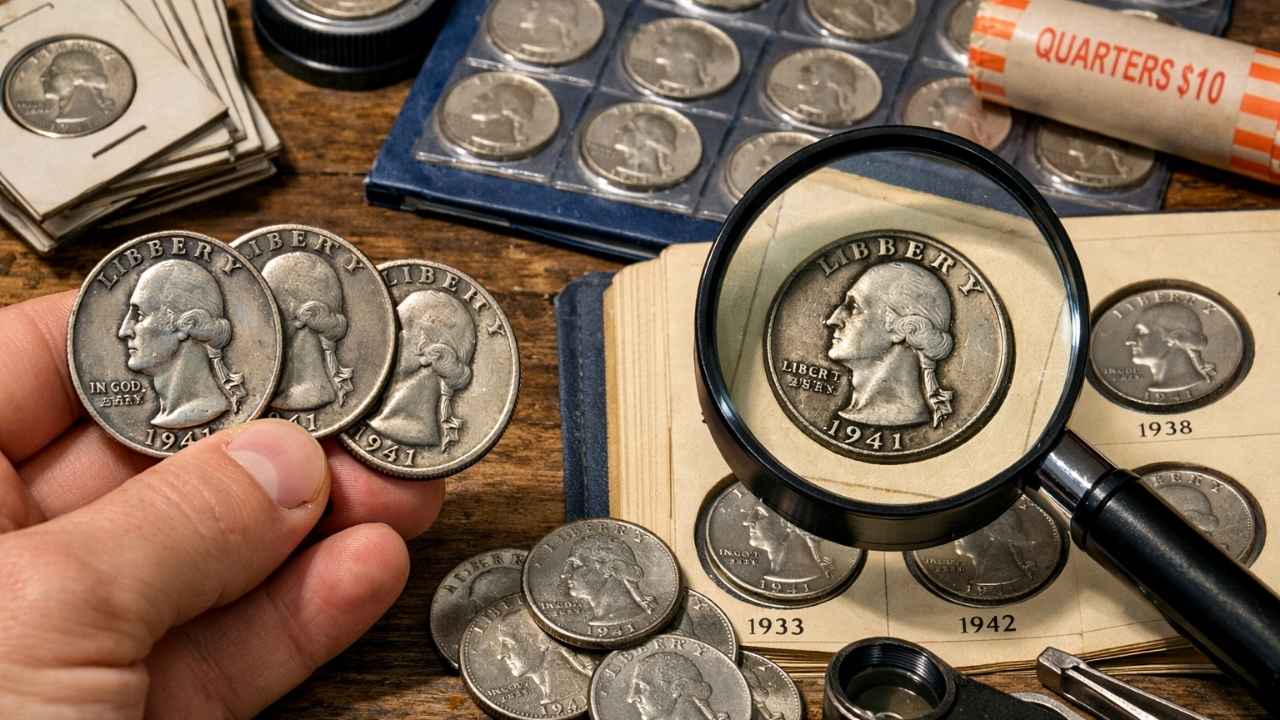
Washington Quarters Collector’s Guide: The Washington quarter is one of the most enduring coins in American history. First minted in 1932 to honor the bicentennial of George Washington’s birth, it has remained a fixture in U.S. coinage for nearly a century. Collectors are drawn to its evolving designs, varied mintages, and the values that reflect both historical significance and market demand. This guide explores the design history, mintage trends, and value patterns of Washington quarters, offering insights for both new and seasoned collectors.
The Origins of the Washington Quarter
The Washington quarter was introduced as a replacement for the Standing Liberty quarter. Sculptor John Flanagan’s design was chosen, featuring Washington’s profile on the obverse and an eagle on the reverse. The coin was intended as a one-year commemorative issue but proved so popular that it became a permanent part of U.S. currency. Its introduction marked a turning point in American coinage, emphasizing national figures and patriotic themes.
Design History
The design of the Washington quarter has undergone several transformations:
- 1932 to 1974: The original eagle reverse remained largely unchanged, with minor modifications to details and relief.
- 1975 to 1976: Bicentennial quarters featured a colonial drummer and torch, celebrating America’s 200th anniversary.
- 1999 to 2008: The 50 State Quarters program introduced new reverse designs for each state, sparking widespread public interest.
- 2010 to 2021: America the Beautiful quarters highlighted national parks and landmarks, continuing the tradition of educational and commemorative coinage.
- 2022 onward: The American Women Quarters program began, honoring influential women in U.S. history with fresh designs.
This progression reflects the coin’s adaptability and its role as a canvas for national storytelling.

Mintage Trends
Mintage numbers for Washington quarters vary significantly across decades. Early issues from the 1930s and 1940s often had lower mintages, making them more desirable today. For example, the 1932-D and 1932-S quarters are considered key dates due to their limited production. In contrast, modern quarters from the State Quarters program were minted in the billions, ensuring widespread availability but still offering collectible value in pristine condition.
Mint marks also influence rarity. Quarters struck in Denver (D), San Francisco (S), and Philadelphia (no mint mark until 1980) can differ in scarcity. Proof coins from San Francisco are especially prized for their sharp details and mirror-like finishes.

Key Dates for Collectors
Certain Washington quarters stand out as essential pieces in any collection:
- 1932-D and 1932-S: Low mintage key dates, highly sought after in all grades.
- 1950-D: A mid-century issue with strong collector demand.
- 1976 Bicentennial Proofs: Popular among both casual collectors and serious numismatists.
- 1999 Delaware Quarter: The first of the State Quarters program, often collected as a starting point.
These coins consistently attract attention and command higher values in auctions and private sales.
Value Trends Over Time
The value of Washington quarters depends on rarity, condition, and collector interest. Silver quarters minted before 1965 contain 90 percent silver, giving them intrinsic value beyond their collectible appeal. Over the past decade, early silver issues and key dates have shown steady appreciation. Modern quarters, while common, can still hold value in uncirculated or proof condition, especially when part of complete sets.
The Role of Coin Grading
Professional grading has become increasingly important in the Washington quarter market. Coins certified by services such as PCGS or NGC often sell for multiples of their raw counterparts. High-grade examples, particularly those in mint state or proof condition, command significant premiums. Collectors who invest in graded coins benefit from both authenticity and market confidence.

Collecting Strategies
Successful collectors often follow these strategies:
- Focus on key dates and low mintage issues.
- Prioritize condition, seeking uncirculated or proof coins.
- Build complete sets, such as the State Quarters or America the Beautiful series.
- Stay informed about market trends and auction results.
These approaches ensure both enjoyment and long-term value in a collection.
The Future of Washington Quarters
Looking ahead, Washington quarters will continue to evolve as new programs introduce fresh designs. The American Women Quarters program has already generated excitement, and future initiatives may further expand the coin’s appeal. As younger generations enter the hobby, demand for both historical and modern issues is likely to remain strong.
Conclusion
The Washington quarter is more than just a piece of currency. It is a symbol of American history, artistry, and national pride. From the rare 1932-D and 1932-S issues to the widely collected State Quarters, each coin tells a story. Over the past decade, values have reflected both rarity and condition, rewarding collectors who focus on quality and key dates. For those entering the world of numismatics, Washington quarters offer a rich and accessible path into coin collecting, ensuring their place in American culture for generations to come.