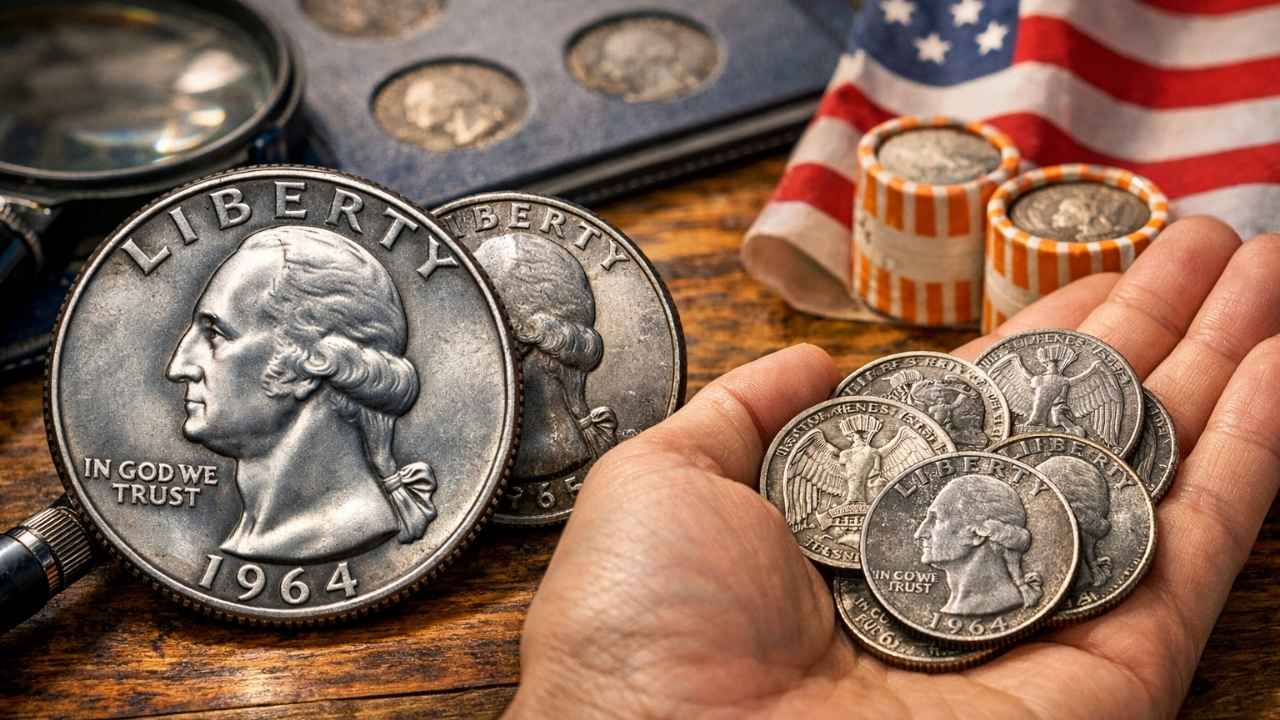
Washington Quarters Explained: The Washington Quarter is one of the most enduring coins in American numismatics. First introduced in 1932 to commemorate the 200th anniversary of George Washington’s birth, it has remained a staple of US coinage for nearly a century. Over the decades, the Washington Quarter has undergone design changes, shifts in composition, and fluctuations in collector value. This guide explores its design history, mintage figures, and value ranges, offering collectors and enthusiasts a comprehensive look at one of America’s most iconic coins.
Origins of the Washington Quarter
The Washington Quarter was born out of a national desire to honor the first president of the United States. In 1932, Congress authorized the coin as part of the bicentennial celebration of George Washington’s birth. Sculptor John Flanagan’s design was chosen, featuring a profile of Washington on the obverse and an eagle on the reverse. The coin was intended to be a one-year commemorative issue, but its popularity ensured that it became a permanent fixture in American coinage.

Early Design and Composition
The original Washington Quarter was struck in 90 percent silver and 10 percent copper. This composition remained standard until 1965, when rising silver prices forced a change. The obverse design featured Washington’s bust, while the reverse displayed a heraldic eagle with outstretched wings. The simplicity and dignity of the design contributed to its longevity.
The Transition to Clad Coinage
In 1965, the Coinage Act mandated a shift from silver to copper-nickel clad composition. This change was driven by economic necessity, as silver had become too valuable to continue in circulating coinage. The new quarters retained the same design but lost their intrinsic silver value. Collectors often distinguish between pre-1965 silver quarters and post-1965 clad quarters, with the former commanding higher premiums.
Bicentennial Redesign
In 1976, the Washington Quarter underwent a temporary redesign to celebrate the nation’s bicentennial. The obverse retained Washington’s portrait, but the reverse featured a colonial drummer and a torch encircled by thirteen stars. These Bicentennial Quarters, dated “1776–1976,” were struck in both clad and 40 percent silver versions. They remain popular among collectors and symbolize a unique chapter in the coin’s history.
State Quarters Program
One of the most significant evolutions of the Washington Quarter came in 1999 with the launch of the State Quarters Program. Over ten years, each state was honored with a unique reverse design. This program reinvigorated public interest in coin collecting, introducing millions of Americans to numismatics. The obverse continued to feature Washington, though modified slightly to accommodate the new reverses.

America the Beautiful Quarters
Following the success of the State Quarters, the America the Beautiful Quarters Program began in 2010. This series featured national parks and historic sites across the country. The obverse retained Washington’s portrait, while the reverse showcased detailed depictions of landscapes and monuments. This program extended the legacy of the Washington Quarter into the twenty-first century.
Mintage Figures
Mintage numbers for Washington Quarters vary widely depending on year and mint. Early silver issues often had lower mintages compared to later clad coins. The State Quarters and America the Beautiful series saw massive production runs, with billions of coins struck to meet collector demand. Key dates, such as the 1932-D and 1932-S quarters, remain highly sought after due to their limited mintage.

Collector Value
The value of Washington Quarters depends on several factors, including date, mint mark, condition, and composition. Common clad quarters from the late twentieth century are typically worth face value, while silver issues command premiums based on silver content and rarity. Key dates and error coins can reach values in the hundreds or thousands. For example, the 1932-D and 1932-S quarters are valued well above $100 in circulated condition and much higher in mint state.
Proof and Special Issues
Proof Washington Quarters, struck with polished dies and special planchets, are highly prized by collectors. These coins often feature mirror-like fields and frosted devices. Silver proof sets, particularly those from the Bicentennial era, are especially popular. Modern proof quarters from the State and America the Beautiful programs also attract significant collector interest.
Error Coins
Error Washington Quarters, such as double dies, off-center strikes, and wrong planchet errors, can command substantial premiums. Collectors are always on the lookout for these anomalies, which add intrigue and rarity to the series. Some error coins have sold for thousands of dollars, making them a fascinating niche within Washington Quarter collecting.
The Legacy of the Washington Quarter
The Washington Quarter has endured for nearly a century, adapting to changing times while maintaining its iconic portrait of the nation’s first president. From its silver origins to its clad composition, from commemorative issues to state and national park designs, the coin reflects the evolving story of America. For collectors, it offers a rich field of study, with opportunities ranging from affordable circulation finds to rare and valuable treasures.

Conclusion
The Washington Quarter is more than just a coin. It is a symbol of American history, artistry, and resilience. Its design history tells the story of a nation honoring its founding father, while its mintage figures reveal the economic and cultural shifts of the twentieth and twenty-first centuries. Its value guide demonstrates the wide range of collecting opportunities, from everyday pocket change to rare key dates worth thousands. In 2026, the Washington Quarter continues to captivate collectors and remains one of the most beloved coins in US numismatics.