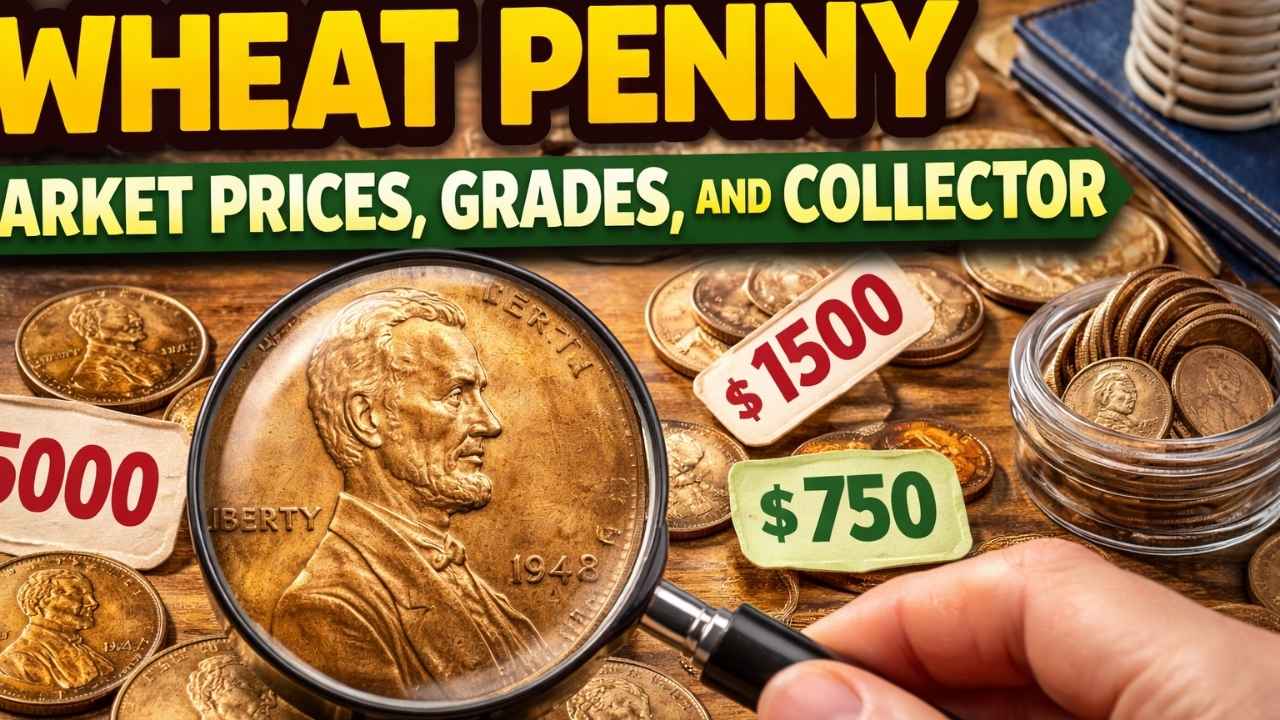
2026 Wheat Penny Market: The Lincoln Wheat Penny, minted from 1909 until 1958, remains one of the most beloved coins in American numismatics. Its design, featuring Abraham Lincoln on the obverse and two wheat stalks on the reverse, symbolizes both national pride and agricultural prosperity. Even in 2026, decades after production ceased, the Wheat Penny continues to attract collectors, investors, and hobbyists who see it as a gateway into coin collecting. The coin’s affordability, historical significance, and potential for high-value rarities make it a cornerstone of the hobby.
Historical Context and Design Appeal
The Wheat Penny was introduced in 1909 to commemorate the centennial of Abraham Lincoln’s birth. Victor David Brenner’s design was revolutionary at the time, placing a real person on U.S. coinage rather than allegorical figures. The wheat stalk reverse was simple yet elegant, representing prosperity and agriculture. Collectors today value not only the artistry but also the cultural significance of this coin, which marked a turning point in American coin design.

Market Trends in 2026
The 2026 market for Wheat Pennies reflects a blend of steady demand and selective premium pricing. Common circulated examples trade for just a few cents to a few dollars, making them accessible to beginners. However, rare dates, mintmarks, and error coins continue to command strong premiums. Online auctions, registry set competitions, and renewed interest in early 20th-century copper coins have kept demand robust. The market is not driven by speculation but by consistent collector interest and historical appeal.
The Role of Grading in Value
Professional grading by services such as PCGS and NGC is essential for determining the true value of Wheat Pennies. Coins are graded on a scale from Poor (P-1) to Mint State (MS-70). The difference in price between a circulated coin and a high-grade uncirculated example can be dramatic. For instance, a common 1940 Wheat Penny in circulated condition may be worth only a few cents, while a Mint State 67 example could fetch hundreds of dollars. Collectors in 2026 increasingly rely on certified grades to ensure authenticity and maximize resale potential.

Key Dates and Varieties
Certain Wheat Pennies stand out as legendary within the series. The 1909-S VDB remains the most famous, with values ranging from hundreds to tens of thousands depending on grade. Other key dates include the 1914-D, 1922 No D, and 1931-S. Error coins, such as doubled dies and off-center strikes, also attract significant attention. In 2026, these rarities continue to be the backbone of serious collections, often serving as the centerpiece of registry sets.
Prices Across Grades
The price spectrum for Wheat Pennies in 2026 is wide. Common dates in Good to Fine condition may sell for under a dollar. Mid-grade coins in Very Fine to Extremely Fine condition often range from $1 to $10. Uncirculated examples can command $20 to $50, while high-grade Mint State coins may reach into the hundreds. Key dates and varieties, however, break these ranges entirely, with rare examples selling for thousands or more. This tiered pricing structure allows collectors at all levels to participate meaningfully in the market.

Collector Demand and Psychology
Collector demand for Wheat Pennies is driven by several factors. Nostalgia plays a role, as many collectors remember finding Wheat Pennies in circulation decades ago. The coin’s affordability makes it an attractive entry point for beginners. Meanwhile, advanced collectors pursue high-grade examples and rare varieties to complete registry sets. The psychology of collecting—seeking completion, rarity, and historical connection—ensures that Wheat Pennies remain relevant in 2026.
Investment Potential
While coin collecting is primarily a hobby, Wheat Pennies offer investment potential. Copper content provides a baseline intrinsic value, though it is minimal compared to collector premiums. The real investment lies in rare dates and high-grade coins, which have shown consistent appreciation over time. In 2026, investors view Wheat Pennies as a stable niche within numismatics, less volatile than modern speculative issues but still capable of delivering strong returns.
Auction Activity and Online Platforms
Online auctions have transformed the Wheat Penny market. Platforms allow collectors worldwide to bid on rare coins, increasing liquidity and transparency. Registry set competitions encourage collectors to seek the finest known examples, driving prices upward for top-graded coins. In 2026, digital marketplaces dominate the trade, making Wheat Pennies more accessible than ever while also intensifying competition for rare pieces.
Building a Collection in 2026
For new collectors, building a Wheat Penny collection can be both affordable and rewarding. Starting with common dates in circulated condition provides a foundation. From there, collectors can pursue semi-key dates and gradually aim for rarities. Many choose to collect by year and mintmark, while others focus on high-grade examples or error coins. The diversity of approaches ensures that every collector can tailor their collection to personal interests and budget.
Challenges in the Market
Despite its strengths, the Wheat Penny market faces challenges. Counterfeits remain a concern, particularly for key dates like the 1909-S VDB and 1914-D. Proper authentication and grading are essential to avoid costly mistakes. Market saturation of common dates can also limit appreciation potential. Additionally, fluctuations in copper prices, while minor compared to collector demand, can influence perceptions of value. Collectors in 2026 must remain vigilant and informed.
The Future Outlook
Looking ahead, the Wheat Penny market shows no signs of decline. Its historical significance, accessibility, and rarity-driven premiums ensure continued relevance. As younger generations enter the hobby, the Wheat Penny serves as a natural starting point. Advances in digital trading and grading technology will further enhance transparency and trust. In 2026, the Wheat Penny stands as both a nostalgic relic and a dynamic collectible with enduring appeal.

Conclusion
The Wheat Penny in 2026 represents more than just a coin. It is a bridge between history and modern collecting, a symbol of artistry and heritage, and a market with opportunities for both beginners and seasoned numismatists. Prices vary widely depending on grade and rarity, but demand remains strong across all levels. For collectors and investors alike, the Wheat Penny continues to shine as a timeless piece of American numismatic history.