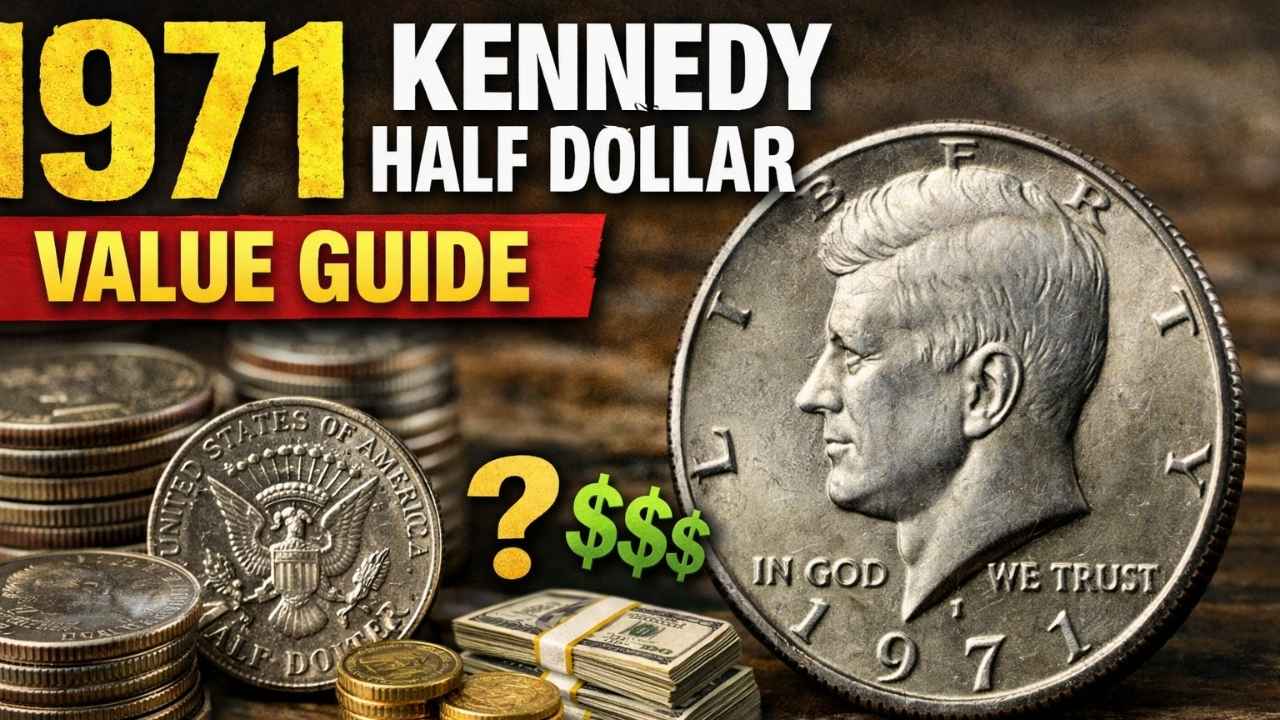
1971 Kennedy Half Dollar Value Guide: The Kennedy Half Dollar is one of the most recognizable coins in American numismatics. First struck in 1964 to honor President John F. Kennedy after his assassination, the coin quickly became a symbol of national pride. By 1971, the series had already undergone several changes in composition and production, making the 1971 issue particularly interesting for collectors. This guide explores the value, rarity, and collector insights surrounding the 1971 Kennedy Half Dollar.
Historical Background
The Kennedy Half Dollar was introduced as a replacement for the Franklin Half Dollar. Its design, featuring Kennedy’s profile on the obverse and the Presidential Seal on the reverse, was created by Gilroy Roberts and Frank Gasparro. In 1971, the coin underwent a major change: the U.S. Mint stopped using silver in circulation strikes, switching instead to a copper-nickel clad composition. This marked the end of an era and the beginning of a new chapter for the series.
Composition and Minting
The 1971 Kennedy Half Dollar was minted in two primary locations: Philadelphia and Denver. Both produced circulation strikes in copper-nickel clad. The San Francisco Mint also struck proof coins, which were sold to collectors. Unlike earlier issues, no 40 percent silver coins were struck for circulation in 1971, though silver-clad proofs had been issued in prior years. This makes the 1971 issue notable as the first fully clad circulation strike in the series.
Mintage Figures
Philadelphia produced over 155 million coins, while Denver struck more than 300 million. These high mintages mean that the 1971 Kennedy Half Dollar is not rare in general circulation. Proof coins from San Francisco totaled around 3 million, making them more limited but still widely available to collectors. The sheer volume of coins produced ensures that most examples are common, though condition and strike quality can affect value.
Circulation Value
In circulated condition, the 1971 Kennedy Half Dollar typically holds only face value. Because it lacks silver content, it does not carry intrinsic metal value beyond its denomination. However, collectors often seek out well-preserved examples, and coins with minimal wear can command a small premium. For most people, finding one in pocket change is more of a nostalgic discovery than a financial windfall.
Collector Value
Uncirculated examples of the 1971 Kennedy Half Dollar are more desirable. Coins graded Mint State (MS) 65 or higher can sell for several dollars, depending on demand. Proof coins, especially those with deep cameo contrast, are valued more highly. While not rare, they appeal to collectors who enjoy pristine examples of the series. The value increases significantly for coins with exceptional eye appeal or those certified by major grading services.
Errors and Varieties
One of the most intriguing aspects of the 1971 Kennedy Half Dollar is the presence of mint errors and varieties. Some coins were struck on leftover silver planchets, creating rare transitional errors. These are highly prized by collectors and can sell for hundreds or even thousands of dollars. Other varieties include doubled dies and off-center strikes, which add interest and value to the otherwise common issue.
Popularity Among Collectors
The Kennedy Half Dollar remains popular due to its historical significance and connection to President Kennedy. The 1971 issue, while common, represents a turning point in the series. Collectors often include it in complete sets, and its affordability makes it accessible to beginners. The coin’s design and symbolism continue to resonate, ensuring its place in American numismatic culture.
Investment Potential
From an investment perspective, the 1971 Kennedy Half Dollar is not considered a high-value coin unless it is an error or exceptionally high-grade proof. Its abundance in circulation limits its appreciation potential. However, rare varieties and pristine examples can provide solid returns. For most collectors, the coin is valued more for its historical importance than its financial gain.
Tips for Collectors
When collecting 1971 Kennedy Half Dollars, focus on condition and variety. Look for coins with sharp details, minimal marks, and strong luster. Proof coins with deep cameo contrast are especially attractive. If you suspect an error coin, consider professional grading to confirm authenticity and value. Building a complete Kennedy Half Dollar set can be rewarding, and the 1971 issue is an essential piece of that puzzle.
Conclusion
The 1971 Kennedy Half Dollar may not be rare in the traditional sense, but it holds a special place in numismatic history. As the first clad circulation strike, it marks a significant shift in U.S. coinage. While most examples are common and worth little more than face value, high-grade proofs and rare errors can command impressive premiums. For collectors, the coin offers both historical significance and the thrill of discovery, making it a worthy addition to any collection.