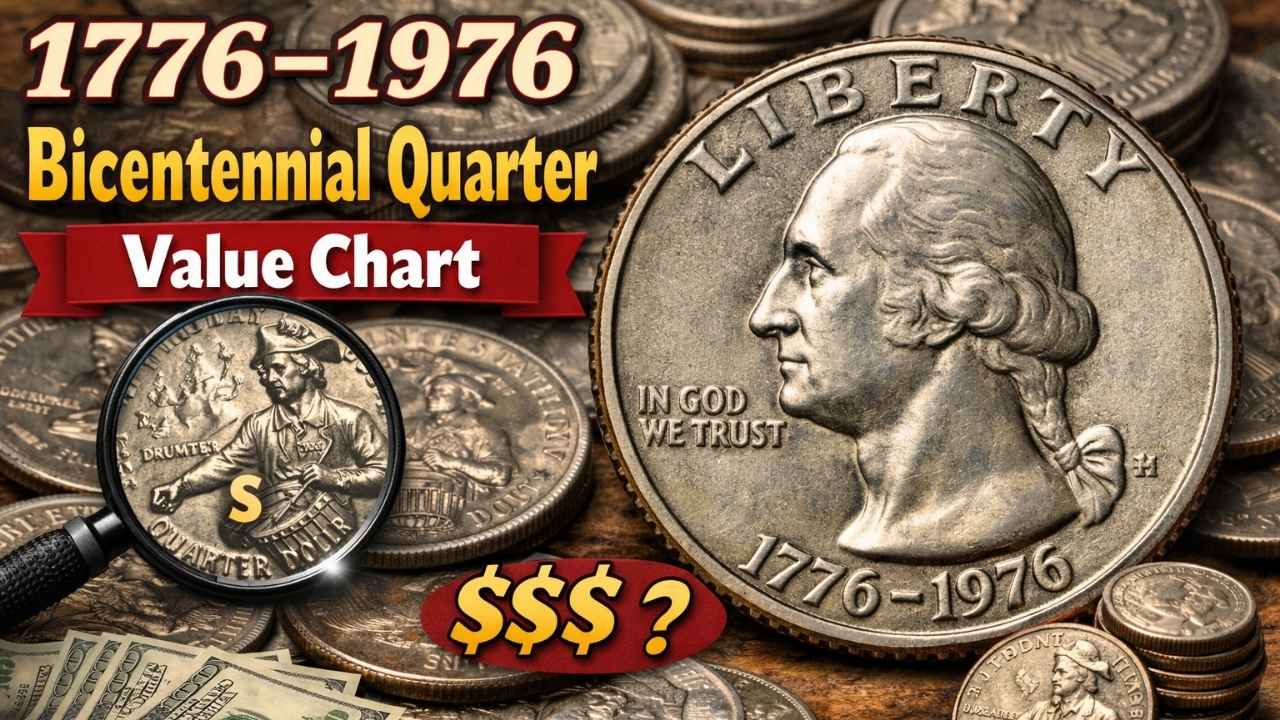
1776–1976 Bicentennial Quarter Value Chart: The 1776–1976 Bicentennial quarter is one of the most recognizable coins in American numismatics. Struck to commemorate the 200th anniversary of independence, it features George Washington’s profile on the obverse and a colonial drummer on the reverse. While hundreds of millions were minted, certain varieties, silver proofs, and rare errors have become highly desirable among collectors and investors. In 2026, the market for Bicentennial quarters remains strong, with values ranging from face value to thousands of dollars depending on rarity and condition. This article provides a complete guide to the coin’s history, varieties, and current values.
Historical Background of the Bicentennial Quarter
The Bicentennial quarter was first released in 1975 and continued through 1976. Unlike regular quarters, it carries the dual date 1776–1976, symbolizing the nation’s journey from its founding to its bicentennial milestone. The reverse design by Jack L. Ahr depicts a colonial drummer, chosen to reflect the patriotic spirit of independence. The coin was part of a larger Bicentennial coinage program that included half dollars and dollars, all featuring special designs. While most examples are common, certain silver-clad proofs and minting errors have become highly valuable in today’s collector market.

Circulated Clad Quarters
The majority of Bicentennial quarters were struck in copper-nickel clad composition at the Philadelphia and Denver mints. Circulated examples are abundant and typically worth between face value and $1.50 depending on condition. They are not rare, but they remain popular among casual collectors who enjoy the historical design and symbolism.
Uncirculated Clad Quarters
Uncirculated clad quarters from the Philadelphia and Denver mints are more desirable. These coins, preserved in mint sets or rolls, can fetch between $3 and $12 depending on grade. Collectors often seek high-grade specimens certified by professional grading services, which can command premiums. Coins graded MS67 or higher are especially prized.
Proof Clad Quarters
Proof clad quarters were struck at the San Francisco Mint with sharp details and mirror-like surfaces. These coins are valued between $5 and $15. Their appeal lies in their craftsmanship and presentation, often sold in proof sets that remain popular among collectors. High-grade proofs with deep cameo contrast can reach higher values.
Silver Proof Quarters
The San Francisco Mint also produced 40 percent silver proof quarters, which are highly sought after today. Values range from $10 to $35 depending on condition. These coins are prized for their silver content and limited mintage, making them a cornerstone of Bicentennial collections. Collectors often pursue complete sets of silver Bicentennial coins, which include the quarter, half dollar, and dollar.

Rare Error Quarters
Error coins are the true gems of Bicentennial quarter collecting. Some feature doubled die obverse errors, where the date or lettering appears duplicated. Others show off-center strikes, giving the coin a quirky, misaligned look. These errors can range in value from $150 to over $5,000 depending on rarity and demand. Collectors are particularly excited by dramatic errors that stand out visually, as they represent unique minting anomalies.
Value Chart for Bicentennial Quarters in 2026
| Type of Bicentennial Quarter | Mint | Composition | Typical Value Range (2026) |
|---|---|---|---|
| Circulated Clad Quarter | P / D | Copper-nickel | Face value to $1.50 |
| Uncirculated Clad Quarter | P / D | Copper-nickel | $3 to $12 |
| Proof Clad Quarter | S | Copper-nickel | $5 to $15 |
| Silver Proof Quarter | S | 40% Silver | $10 to $35 |
| Error Quarter (various types) | P / D / S | Copper-nickel or silver | $150 to $5,000+ |
Collector and Investor Appeal
For collectors, the Bicentennial quarter represents a piece of American history that is accessible yet full of surprises. While most examples are common, the pursuit of high-grade coins, silver proofs, and rare errors adds excitement to the hobby. For investors, the coin offers opportunities in the form of rare varieties that appreciate in value over time. The Bicentennial quarter is a reminder that even modern commemorative coins can achieve legendary status when rarity and demand align.

Conclusion
The 1776–1976 Bicentennial quarter continues to captivate collectors and investors in 2026. From circulated clad coins worth little more than face value to rare errors fetching thousands, the coin offers something for everyone. Its historical significance, patriotic design, and variety of mintages make it a timeless treasure in American numismatics. Whether you are a casual collector or a serious investor, the Bicentennial quarter remains a coin worth exploring and preserving.